
If I want to design a good piezoelectric formulation, what rare earth should I put into formulation?
In currently popular piezoelectric ceramic formulation, the scientist often adds rare earth elements for modification. So what rare earth materials should I add?
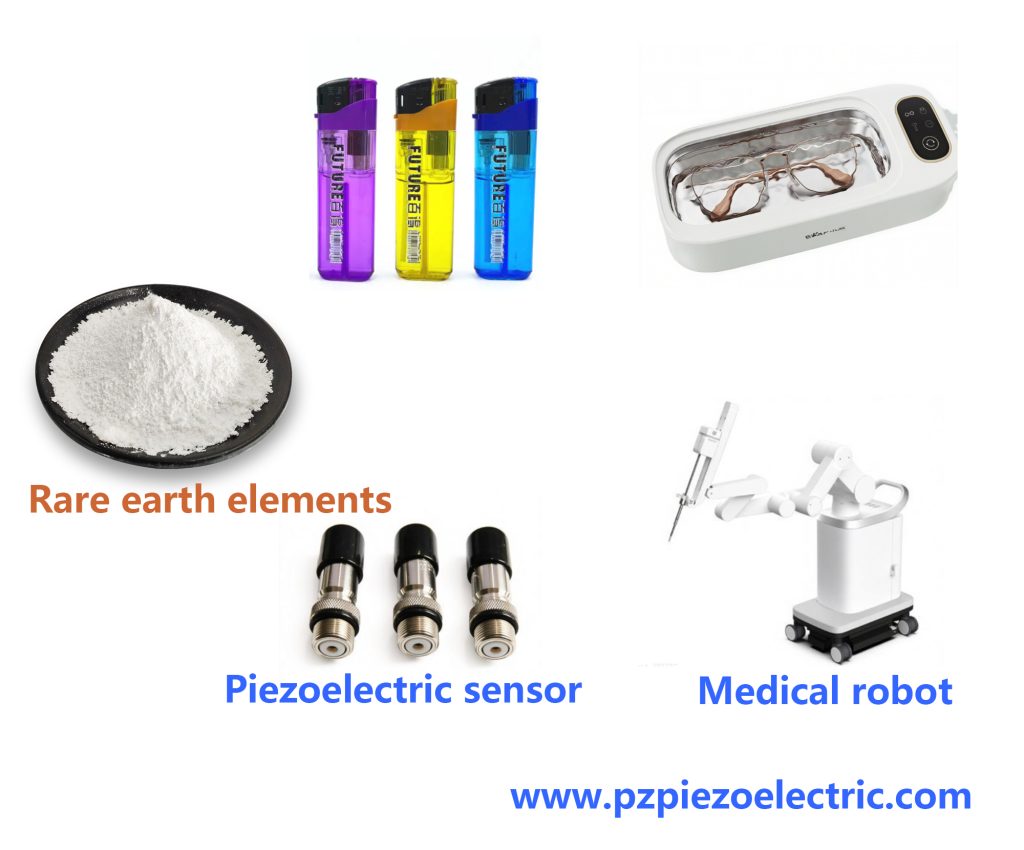
- In piezoelectric formulation for Electronic cigarette lighter and other piezoelectric igniters: Antimony trioxide and Cerium oxide are needed. They can improve the sintering temperature of the piezoelectric ceramic, reduce lead volatilization at high temperatures, enhance sintering density, and make the instantaneous high voltage of piezoelectric ignition more stable.
- In common PZT4 piezoelectric ceramic discs for ultrasonic cleaning: Lanthanum (La) is needed to increase the piezoelectric coefficient d33 value.
- In PZT5 piezoelectric formulation material for ultrasonic probes and high-precision piezoelectric sensors, requires the addition of Samarium (Sm) to improve the respone speed and power supply capability of the piezoelectric device.
- Ultra-high piezoelectricity performance medical surgical robots and nanoscale displacement platforms, they require the Europium (Eu) and Dysprosium (Dy).
Piezoelectric ceramics that need to operate under high temperatures require the Thulium (Tm): It can significantly improves the material’s high-temperature stability and resistance to depolarization, making it suitable for high-power, wide-temperature-range using.
Of course, many other rare earth elements are also used in piezoelectric ceramics. For example, Praseodymium (Pr) can refine grains and regulate domain structure, significantly improving the material’s piezoelectric, electrical, and temperature stability. Neodymium (Nd) can lower the Curie temperature of piezoelectric ceramic devices.
If more info you want to know, PLS contact Zibo Piezo Technology Co.