
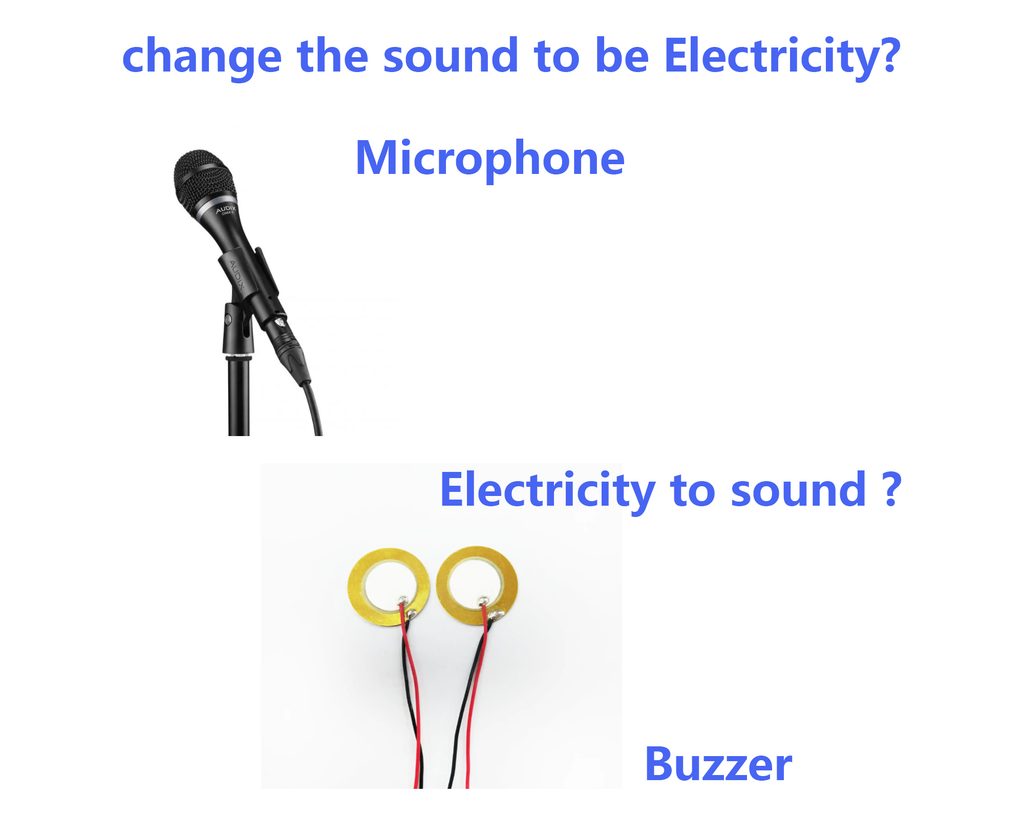
How to change the sound to be Electricity? Piezoelectric ceramic
Is there a material that can convert electrical energy into sound energy ?and then also it can convert sound energy into electrical energy?
Yes, There is, the material is piezoelectric ceramic.
Wait, let me think… isn’t this the telephone I’m using? or Mobile phone technology?
Emm, Sorry this is out of my plan, my plan is to explain the piezoelectric ceramic.
But now, face this telephone, I still need to explain the telephone working first.
A telephone uses sound wave vibrations to generate an electric current, Then it is transmitted. The person answering the phone then converts the current back into sound.
You might ask, “Piezoelectric ceramics also vibrate with sound waves, causing the ceramic material to vibrate and (using the piezoelectric effect) generate an electric current, then also it is transmitted.”
Still same? Right?
OK, Let me explain the core difference.
Regular telephone receiver chip is thinner and more sensitive, producing a continuous and stable current curve. It use Electromagnetic induction to get electrical current.
Ordinary piezoelectric ceramic sheets have a narrow vibration amplitude, resulting in a sharp current curve. But it output the electrical current direct, no need Electromagnetic induction principle.
So in the common mobilephone, we dont use piezoelectric ceramic.
Does this mean its uncessary to use piezoelectric ceramics to get Electric to sound conversion?
In fact, we still use it extensively in our daily lives for common warning sounds.
When you press a calculator button, it produces a sound; this is an application of piezoelectric ceramics converting electrical energy into sound energy.
When your washing machine beeps after washing clothes, it’s also an application of piezoelectric ceramics converting electrical energy into sound energy.
Musical greeting cards, when you open card, playing a phase of electronic music; that’s also piezoelectric ceramics at work.
Okay, let’s look at some other applications: sound-to-electricity conversion:
- Piezoelectric microphones (Next time you go to a bar to sing, ask what type of microphone they use.)
- Hydrophones, a type of waterproof underwater microphone. A passive acoustic sensor, it only receives underwater sound signals and can be used for:
long-term monitoring of ocean background noise, recording the sounds of deep-sea animals, and capturing long-distance underwater volcano eruption sound and earthquake sound, helping researchers study deep-sea geological activity.
Anything else? Yes, there are other applications:
such as medical ultrasound diagnostics, which are frequently used during body examinations. Industrial ultrasonic testing, it will not be used during your body examination, But in order to keep your life safe. Your city needs frequent physical examination also(many pipes).
The piezoelectric ceramic elements inside these devices can receive reflected mechanical sound waves and then convert the sound energy back into electrical signals to create three-dimensional images or dynamic videos.
If you are interested in the piezoelectric ceramic product, PLS follow us, if you want to learn the technology, even you want to set up a piezoelectric ceramic, we also can help. We have the mature technology.